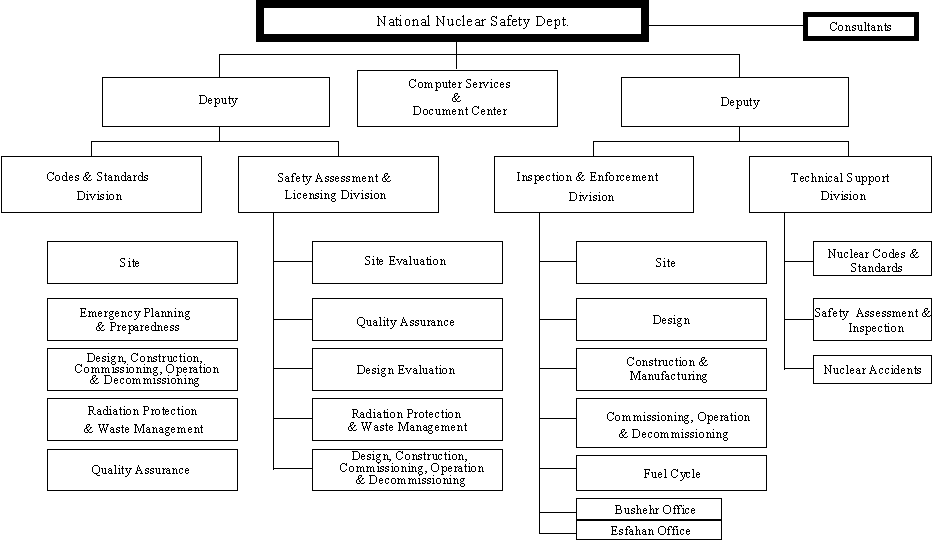
 FIG. 1. Organizational
Structure of NNSA
FIG. 1. Organizational
Structure of NNSA ISLAMIC REPUBLIC OF IRAN
1. ENERGY, ECONOMIC AND ELECTRICITY INFORMATION
1.1 General Overview
The Islamic Republic of Iran is situated in the Middle East and has an area of 1,648,195 square kilometres with a population of about 63 million, which has doubled over the last three decades (Table 1). It is bordered by Armenia, Azerbaijan and Turkmenistan Republics and Caspian Sea in the north, Afghanistan and Pakistan in the east, Turkey and Iraq in the west and Kuwait, Persian Gulf and Gulf of Oman in the south. Mountain chains like Zagros and many other mountains make Iran's feature a mountainous country.
TABLE 1. POPULATION INFORMATION
|
|
|
|
|
|
|
|
|
Growth |
|
|
|
|
|
|
|
|
|
rate (%) |
|
|
|
|
|
|
|
|
|
1990 |
|
|
|
1970 |
1980 |
1990 |
2000 |
2001 |
2002 |
To |
|
|
|
|
|
|
|
|
|
2002 |
|
|
|
|
|
|
|
|
|
|
|
Population (millions) |
|
28.4 |
39.3 |
56.3 |
66.4 |
67.2 |
68.1 |
1.6 |
|
Population density (inhabitants/km²) |
17.3 |
23.8 |
34.2 |
40.3 |
40.8 |
41.3 |
|
|
|
|
|
|
|
|
|
|
|
|
|
|
|
|
|
|
|
|
|
|
|
Predicted population growth rate (%) 2002
to 2010 |
|
18.6 |
|
|
|
|
||
|
Area (1000 km²) |
|
|
|
1648.0 |
|
|
|
|
|
Urban population in 2002 as percent of total |
|
65.5 |
|
|
|
|
||
Source: IAEA Energy and Economic Database.
From north to the south of the country, climate and temperature change abruptly (-20°C, +50°C). Central and Southern Iran is dry and hot with low precipitation. On the whole, it has four distinct seasons. The southern part, nearby Persian Gulf, where Bushehr Nuclear Power Plant is situated has long, hot and humid summers and moderate winters. It has a fairly high seismic activity.
It is one of the world's main oil producers. The country holds large reserves
and has many potential reservoirs. Within Iran there are three geographic areas
of oil production (north, central, southwest) and one of gas (southeast) but
geologically most of the country's vast oil and gas reserves are located along
the fold and thrust belt of the Zagros Mountains. These mountains rise in southeast
Turkey and run along the entire length of Iran until they terminate in the southeast
at the Gulf of Oman at a distance of almost 1,800 km. The country has also coal
and Uranium resources.
1.1.1. Economic Indicators
Table 2 shows the Gross Domestic Product (GDP) statistic.
TABLE 2. GROSS DOMESTIC PRODUCT (GDP)
|
|
|
|
|
|
|
|
|
Growth |
|
|
|
|
|
|
|
|
|
rate (%) |
|
|
|
|
|
|
|
|
|
1990 |
|
|
|
|
1980 |
1990 |
2000 |
2001 |
2002 |
To |
|
|
|
|
|
|
|
|
|
2002 |
|
GDP (millions of current US$) |
|
|
93,923 |
92,959 |
329,880 |
412,561 |
523,902 |
15.5 |
|
GDP (millions of constant 1990 US$) |
|
81,274 |
92,960 |
787,828 |
818,454 |
852,666 |
20 |
|
|
GDP per capita (current US$/capita) |
|
2,393 |
1,651 |
4,965 |
6,135 |
7,696 |
13.7 |
|
Source: IAEA Energy and Economic Database
1.1.2. Energy Situation
On the supply side, more than 98% of primary energy is derived from oil and gas resources and only less than 2% is in from of hydro, coal and non-commercial energies. Likewise, in electrical sector, more than 92% of the present installed capacity (26,000 MW(e)) is based on oil and gas fired turbines and less than 8% of it (about 2,000 MW(e)) is hydro power (Table 3 shows the energy reserves according to EEDB).
TABLE 3. ESTIMATED ENERGY RESERVES
|
|
Estimated energy reserves in |
|||||
|
|
(Exajoule) |
|||||
|
|
|
|
|
|
|
|
|
|
Solid |
Liquid |
Gas |
Uranium |
Hydro |
Total |
|
|
|
|
|
(1) |
(2) |
|
|
|
|
|
|
|
|
|
|
Total amount in place |
52.16 |
532.01 |
938.29 |
0.27 |
35.48 |
1558.21 |
|
|
|
|
|
|
|
|
|
(1)
This total represents essentially recoverable reserves. |
|
|
|
|
||
|
(2)
For comparison purposes a rough attempt is made to convert hydro capacity
to energy by multiplying |
||||||
|
the gross theoretical annual capability
(World Energy Council - 2002) by a factor of 10. |
|
|||||
Source: IAEA Energy and Economic Database.
According to the latest statistics issued by Ministry of Power, the proven and exploitable reserves of oil are about 89.7 billion barrels. Despite of the rapid expansion of the gas sector, in recent years, oil still plays a very important role in energy system as well as economy of the country. Petroleum products constitute more than 55% of the Iran's primary energy supply. The share of oil sector in GDP is about 20% and more than 80% of the country's foreign exchange earnings comes from export of this commodity.
The proven and exploitable gas reserves of Iran are estimated to be 35.4 and 24.5 trillion cubic meters, respectively (about 222 and 154 billion barrels of oil equivalent). These reserves theoretically give Iran a lead-time of more than 400 years to exploit them at the existing production level.
The proven reserves of coal in Iran are estimated to be approximately 13.1 milliard tons. But in regard to the existing technologies, only 10 percent of these resources are exploitable and at much higher cost than that of the international level. That is why coal plays only a minor role in Iran's energy supply mix and it is not regarded a viable option in foreseeable future.
Theoretically, the whole potentials of hydro power in Iran is estimated to be approximately 42,000 MW(e). According to the latest information released by Ministry of Power, the practical hydro potential of the country is projected to be only 23,000 MW(e). Up to now around 2,000 MW(e) has been exploited and another 9,000 MW(e) is in process of execution, about 1,700 MW(e) is under consideration and more than 7,000 MW(e) is at the sage of recognition.
Uranium resources of Iran are not considered a rich one. The results of the Atomic Energy Organization of Iran (AEOI) exploration activities have shown proven reserves of about 3,000 tons of Uranium so far. According to the discovered indices (more than 350 anomalies) and the results of the field discoveries, the expected resources of Iran could be at the range of 20,000-30,000 tons of U3O8, throughout the country. Therefore Iran's domestic reserves might be sufficient enough to supply the raw material for needed nuclear power plants in future.
According to all the surveys performed in power sector of Iran, nuclear option is the most competitive to fossil alternatives if the existing low domestic fuel prices are gradually increased to its opportunity costs at the level of international prices.
There are ample potentials of renewable energies in Iran. The annually average daily solar radiation is about 2,000 kW·h per m2. There are also good potentials of wind and geothermal energies in some parts of the country. However, because of the limitation of the existing technologies for steady and reliable supply of energy and much higher unit cost of electricity generated by these resources, it is not expected that renewable play a major role in Iran's electricity system in near future.
Due to a very cheap price of primary energy and the increase in population, the final energy consumption has increased more than 7% annually and electricity production has risen 10% per year in the last two decades.
In another words, while the size of population is nearly doubled, the final energy consumption is quadrupled and electricity production is more than six folded to meet the existing demand. These figures show a very high level of consumption and an incremental trend of energy intensity. Historical energy statistics are shown in Tables 4a and 4b.
TABLE 4. ENERGY STATISTICS
|
|
|
|
|
|
|
|
Average annual |
|
|
|
|
|
|
|
|
|
growth rate (%) |
|
|
|
|
|
|
|
|
|
1970 |
1990 |
|
|
1970 |
1980 |
1990 |
2000 |
2001 |
2002 |
To |
To |
|
|
|
|
|
|
|
|
1990 |
2002 |
|
|
|
|
|
|
|
|
|
|
|
Energy consumption |
|
|
|
|
|
|
|
|
|
- Total
(1) |
0.90 |
1.50 |
3.00 |
4.83 |
4.90 |
4.93 |
6.21 |
4.22 |
|
- Solids
(2) |
0.03 |
0.05 |
0.07 |
0.07 |
0.07 |
0.07 |
4.22 |
-0.89 |
|
- Liquids |
0.43 |
1.12 |
1.98 |
2.25 |
2.22 |
2.19 |
7.91 |
0.82 |
|
- Gases |
0.42 |
0.27 |
0.88 |
2.48 |
2.58 |
2.64 |
3.82 |
9.53 |
|
- Primary
electricity (3) |
0.02 |
0.05 |
0.06 |
0.04 |
0.03 |
0.04 |
6.68 |
-3.87 |
|
Energy production |
|
|
|
|
|
|
|
|
|
- Total |
8.54 |
3.46 |
7.80 |
10.30 |
10.58 |
10.85 |
-0.45 |
2.78 |
|
- Solids |
0.03 |
0.05 |
0.06 |
0.04 |
0.05 |
0.05 |
2.83 |
-1.33 |
|
- Liquids |
8.04 |
3.08 |
6.74 |
7.87 |
7.90 |
7.96 |
-0.87 |
1.39 |
|
- Gases |
0.45 |
0.28 |
0.94 |
2.35 |
2.60 |
2.81 |
3.75 |
9.51 |
|
- Primary
electricity (3) |
0.02 |
0.05 |
0.06 |
0.04 |
0.03 |
0.04 |
6.68 |
-3.87 |
|
Net import (Import - Export) |
|
|
|
|
|
|
|
|
|
- Total |
-7.41 |
-1.86 |
-4.46 |
-5.32 |
-5.17 |
-4.87 |
-2.50 |
0.73 |
|
- Solids |
0.00 |
0.00 |
0.02 |
0.02 |
0.03 |
0.04 |
33.13 |
6.89 |
|
- Liquids |
-7.37 |
-1.85 |
-4.42 |
-5.47 |
-5.52 |
-5.70 |
-2.52 |
2.13 |
|
- Gases |
-0.03 |
-0.01 |
-0.06 |
0.13 |
0.32 |
0.79 |
2.80 |
-24.20 |
|
|
|
|
|
|
|
|
|
|
|
|
|
|
|
|
|
|
|
|
|
(1) Energy consumption = Primary energy
consumption + Net import (Import - Export) of secondary energy. |
|
|
||||||
|
(2) Solid fuels include coal, lignite
and commercial wood. |
|
|
|
|
|
|
||
|
(3) Primary electricity = Hydro +
Geothermal + Nuclear + Wind. |
|
|
|
|
|
|||
|
(*) Energy values are in Exajoule
except where indicated. |
|
|
|
|
|
|
||
Source: IAEA Energy and Economic Database.
1.2. Energy Policy
Iran's government has given priority to hydropower in the first and second 5 years development plans. This policy will continue in future development programmes. But due to the limitations of hydro potentials and the rapid growth of electricity demand, other options are also need to be considered for diversification purpose.
The policy of the government is to use different energy potentials for conservation measures at present time. To improve the situation the government has decided to increase gradually the price of energy carriers to their opportunity costs within 10-15 years from the beginning of the second development plan (1995).
Moreover, some conservation and energy management measures have been implemented
to control growth of demand in recent years. In supply side, the government
has seriously launched a programme for substitution of gas by oil as well as
more exploitation of hydro power in electricity system of the country. Completion
of Bushehr nuclear power project and implementation of a project to install
100 MW(e) from wind turbine is regarded to be a part of this diversification
programme.
1.3 The Electricity System
1.3.1. Structure of the Electricity Sector
The main producer of electricity in Iran is the Ministry of Power. The electricity system of Iran (production, transmission and distribution) is centralized and owned by the government. Recently, the government has started to study about the privatization in small-scale to assess its benefits and outcomes for future programmes.
1.3.2. Decision-making process
The Ministry of Power is responsible for the development of power sector based on the energy programmes, and concepts, which are approved by the Government of the Islamic Republic of Iran in its 5 years development programmes.
1.3.3. Main Indicators
In 1999, the maximum exploitable power was 23,592 MW(e) with 54.5% share of
steam power plants, 13.5% share of gas power plants, 21.5% share of combined
cycle power plants, 8.5% share of hydro power plants and 2% for diesel power
plants (Table 5). Table 6 shows the historical electricity production and installed
capacity and Table 7 the energy related ratios.
TABLE 5. PRODUCTION CAPACITY AND PRODUCED POWER IN THE POWER PLANTS OF THE MINISTRY OF POWER IN 1999.
|
Power
Plants |
Nominal
|
Practical
Power |
Average |
Maximum |
|
|
Group |
Power |
Maximum |
Minimum |
|
Exploited
Power |
|
Steam Combined
Cycle&Gas Diesel Hydro |
13,115 9,565 593 1,999 |
12,862 8,651 478 1,998 |
12,822 7,420 427 1,998 |
12,842 8,035.5 452.5 1,998 |
12,862 8,261 471 1,998 |
|
Total |
25,272 |
23,989 |
22,667 |
23,328 |
23,592 |
Source: Country Information.
TABLE 6. ELECTRICITY PRODUCTION AND INSTALLED CAPACITY
|
|
|
|
|
|
|
|
Average annual |
|
|
|
|
|
|
|
|
|
growth rate (%) |
|
|
|
|
|
|
|
|
|
1970 |
1990 |
|
|
1970 |
1980 |
1990 |
2000 |
2001 |
2002 |
To |
To |
|
|
|
|
|
|
|
|
1990 |
2002 |
|
|
|
|
|
|
|
|
|
|
|
Electricity production (TW.h) |
|
|
|
|
|
|
|
|
|
- Total
(1) |
6.76 |
22.38 |
59.10 |
116.33 |
124.40 |
129.82 |
11.45 |
6.78 |
|
- Thermal |
5.09 |
16.76 |
53.02 |
112.65 |
120.77 |
126.03 |
12.43 |
7.48 |
|
- Hydro |
1.67 |
5.62 |
6.08 |
3.68 |
3.62 |
3.79 |
6.68 |
-3.87 |
|
- Nuclear |
|
|
|
|
|
|
|
|
|
- Geothermal |
|
|
|
|
|
|
|
|
|
Capacity of electrical plants (GWe) |
|
|
|
|
|
|
|
|
|
- Total |
2.20 |
11.23 |
17.95 |
30.63 |
31.03 |
31.61 |
11.07 |
4.83 |
|
- Thermal |
1.68 |
9.42 |
16.00 |
28.63 |
29.03 |
29.60 |
11.93 |
5.26 |
|
- Hydro |
0.52 |
1.80 |
1.95 |
2.00 |
2.01 |
2.01 |
6.87 |
0.24 |
|
- Nuclear |
|
|
|
|
|
|
|
|
|
- Geothermal |
|
|
|
|
|
|
|
|
|
- Wind |
|
|
|
|
|
|
|
|
|
|
|
|
|
|
|
|
|
|
|
|
|
|
|
|
|
|
|
|
|
(1) Electricity losses are not deducted. |
|
|
|
|
|
|
|
|
Source: IAEA Energy and Economic Database.
TABLE 7. ENERGY RELATED RATIOS|
|
|
|
1970 |
1980 |
1990 |
2000 |
2001 |
2002 |
|
|
|
|
|
|
|
|
|
|
|
Energy consumption per capita (GJ/capita) |
32 |
38 |
53 |
73 |
73 |
72 |
||
|
Electricity per capita (kW.h/capita) |
|
230 |
550 |
998 |
1,669 |
1,765 |
1,818 |
|
|
Electricity production/Energy production (%) |
1 |
6 |
7 |
11 |
11 |
12 |
||
|
Nuclear/Total electricity (%) |
|
|
|
|
|
|
|
|
|
Ratio of external dependency (%) (1) |
|
-824 |
-124 |
-149 |
-110 |
-105 |
-99 |
|
|
Load factor of electricity plants |
|
|
|
|
|
|
|
|
|
- Total (%) |
|
|
35 |
23 |
38 |
43 |
46 |
47 |
|
- Thermal |
|
|
35 |
20 |
38 |
45 |
47 |
49 |
|
- Hydro |
|
|
37 |
36 |
36 |
21 |
21 |
22 |
|
- Nuclear |
|
|
|
|
|
|
|
|
|
|
|
|
|
|
|
|
|
|
|
|
|
|
|
|
|
|
|
|
|
(1)
Net import / Total energy consumption. |
|
|
|
|
|
|
|
|
Source: IAEA Energy and Economic Database.
2. NUCLEAR POWER SITUATION
2.1. Historical Development and current nuclear power organizational structure
2.1.1 Overview
In the mid 1970s, a major nuclear power programme was planned and construction of two nuclear power plants, two 1,200 MW(e) PWR units started at Bushehr by KWU. In 1979, this nuclear power plant construction programme was suspended and construction activities halted, at a fairly advanced stage of the civil work for the two units.
The Islamic Republic of Iran resumed the nuclear power programme in 1991 with a bilateral agreement with China for the supply of two 300 MW(e) PWR units of Chinese design, similar to the Qinshan power plant. The agreement was confirmed in 1993 (but never realized).
In 1994, the Ministry of Atomic Energy of the Russian Federation (MINATOM) and the Atomic Energy Organization of Iran (AEOI) agreed on the scope of work for completing the Bushehr nuclear power plant unit 1 (BNPP-1) with a 1000 MW(e) PWR unit of WWER-1000 type. The contract was signed in 1995. The Russian designed reactor will be constructed using mostly the infrastructure already in place.
2.1.2 Current Organizational Chart(s)
The National Nuclear Safety Department (NNSD) accomplishes the regulatory
tasks of nuclear facilities in Iran. The up-dated organizational chart of NNSD
is shown in Figure 1.
FIG. 1. Organizational
Structure of NNSA
2.2. Nuclear Power Plants: Status and Operations
Completion of Bushehr Nuclear Power Plant is the only on-going nuclear power plant project in Iran, which will provide 1000 MW(e) to the national electrical grid. In fact, it will share about 4% in the total national electricity generation (Table 8). Besides the completion of BNPP-1, work-plan of Unit number 2 is being envisaged.
TABLE 8. STATUS OF NUCLEAR POWER PLANTS
|
Station |
Type |
Net |
Description |
Operator |
Reactor Supplier |
|
BUSHEHR-1 |
PWR |
915 |
Under Construction |
AEOI |
ASE |
|
BUSHEHR-2 |
PWR |
1196 |
Suspended since 1979 |
AEOI |
KWU |
|
Station |
Construction Date |
Criticality |
Grid Connection |
Commercial Date |
Shutdown Date |
|
BUSHEHR-1 |
01-May-75 |
01-Jun-03 |
01-Jul-03 |
01-Dec-03 |
|
|
BUSHEHR-2 |
|
|
|
|
|
Source: IAEA Power Reactor Information System as of 31 December 2001.
2.3 Supply of NPPs
The contractor (Russians) will deliver all supplies and services necessary
to complete and operate the BNPP-1 on a turnkey basis.
2.4 Operation of NPPs
Performance of the unit commissioning (initial fuel loading, initial criticality, low power tests; power generating start up; and trial operation) and performance of the training of the AEOI's personnel (to such an extent that they will be able to operate the unit safely, properly, efficiently, reliably and economically) will be the responsibility of contractor (Russians).
The responsibility for the management and the operation of the unit will be passed on to the AEOI on provisional acceptance of the unit.
Upon request by the AEOI, the contractor will make available and keep at the unit site, for a period and conditions to be agreed upon, a number of specialists to assist the unit operation personnel. For a period of two years, beginning on the date of provisional acceptance of the unit, the contractor (Russians) will make available to the AEOI maintenance specialists who will assist the unit operation personnel in all maintenance work for the unit. The said period may be extended (upon AEOI request). Furthermore, during the period of provisional acceptance until final acceptance of the unit, the contractor may provide additional specialists for additional maintenance and repair services for the unit if it is needed.
2.5 Fuel Cycle and Waste Management
The Uranium Conversion Facility (UCF) is a complex for production of some stages of nuclear fuel materials, which can be utilized for nuclear power and research reactors. At present, the facility is under construction.
The transfer of spent fuel to Russia or storage at the unit site, is discussed
between the Principal and the Contractor.
Waste management services are under the responsibility of the AEOI. The international practice is envisaged for supply of such services. Relevant measures for storage of wastes are to be considered in the unit design.
2.6 Research and Development
The AEOI is the main institute in Iran for research and development activities in the field of nuclear technology.
2.7 International Co-operation and Initiatives
Iran has been participating in some conferences, technical committee meetings, general meetings, advisory group meetings, training and fellowship programmes under the sponsorship of the IAEA or in the frame-work of its Technical Co-operation projects.
The International Atomic Energy Agency enhances the peaceful use of nuclear
energy in Iran by means of the following Technical Co-operation projects:
· Developing Technetium-99m Labeled Radio pharmaceutical Kits Based
on Monoclonal Antibodies and Peptides (IRA/2/006) (new);
· Treatment of Low & Intermediate Level Radioactive Wastes (IRA/4/028)
(continuation);
· Strengthening Owner's Functions for BNPP Project (IRA/4/029) (extension);
· Cyclotron Production of Palladium-103 and Cobalt-57 (IRA/4/032) (new);
· Development of National Waste Management Strategy (IRA/4/033) (new);
· Preparation of Elisa Kits for Diagnosis of Foot and Mouth Disease (IRA/5/012)
(continuation);
· Improvement of Clinical Brachytherapy for Cancer Management (IRA/6/007)
(new);
· Radiation Processing of Polymeric Materials by Electron Beam (IRA/8/015)
(new- Model Project);
· Regulatory Infrastructure for Licensing of BNPP Project (IRA/9/015)
(extension- Model Project);
· Feasibility of Upgrading the Research Reactor (IRA/9/016) (new).
To improve better implementation of these projects, the AEOI has organized some
workshops, meetings and regional training courses through IAEA missions and
assistance in Iran.
3. NATIONAL LAWS AND REGULATIONS
According to the Atomic Energy Act of the Islamic Republic of Iran a License is required for construction, commissioning, operation and decommissioning of nuclear facilities in Iran.
The National Nuclear Safety Department (NNSD) of Iranian Nuclear Regulatory Authority (INRA) has prepared and issued nuclear safety standards for regulating activities to assure safety in nuclear power plants since 1975. The NNSD of INRA issues the regulations, in particular to ensure that the facility is designed in accordance with the latest state-of the art and technology, and there shall be adequate assurance that the erection and operation of the facility will be accomplished without undue risk to the health and safety of the general public and personnel.
With the conclusion of a turnkey contract between Nuclear Power Plant Department of Atomic Energy Organization of Iran (NPPD-AEOI) and ZAO Atomstroyexport of Russian Federation to complete BNPP-1, utilizing the existing structures and equipment at BNPP-1 to the extent feasible and safe, it has become necessary that a specific licensing procedure be developed by the NNSD for Unit completion.
In the licensing procedure, the specific regulatory process is provided for granting license and permits for activities related to the reconstruction of BNPP-1. In preparing this procedure, due account has been given for Iranian regulatory requirements, international recommendations such as those issued by the IAEA, and of safety standards prevalent in the Russian Federation. In addition, specific features of the design and operating characteristics, unusual or novel design measures, and principal safety considerations of the BNPP-1 have been considered. In the said document, special attention has been paid to the existing equipment and structures and their associated quality and performance requirements for completion of the BNPP-1.
This document governs licenses and permits for all activities affecting safety in BNPP-1. It is mandatory for all organizations involved in the safety concerned activities in BNPP-1 completion to comply with the relevant provisions of requirements licensing procedure. The NNSD will supervise the implementation of the requirements of the said document.
3.1. Safety Authority and the Licensing Process
3.1.1. The Iranian Nuclear Regulatory Authority
The Iranian Nuclear Regulatory Authority (INRA) of AEOI is an independent national body authorized for issuing rules and regulations and conducting the licensing and supervisory processes for issuing licenses and thereby regulating nuclear and radiation safety for siting, design, manufacturing, construction, operation, and decommissioning of the nuclear industry facilities or specific aspects thereof. The INRA is also responsible for national radiation protection and national system of accountancy and control of nuclear materials (safeguards).
3.1.2. National Nuclear Safety Department (NNSD)
The regulatory and supervisory functions of the INRA for BNPP-1 are performed by NNSD, which is a subdivision of INRA.
3.2. Main National Laws and Regulations in Nuclear Power
· Atomic Energy Act of Iran
In 1974 the Atomic Energy Act of Iran was promulgated. The Act covers the activities
for which the Atomic Energy Organization of Iran was established at that period.
These activities included using atomic energy and radiation in industry, agriculture
and service industries, setting up atomic power stations and desalination factories,
producing source materials needed in atomic industries, creating the scientific
and technical infrastructure required for carrying out the said projects, as
well as co-ordinating and supervising all matters pertaining to atomic energy
in the country.
After final decision of the government to start completion activities at Unit
1 of Bushehr Nuclear Power Plant, this Act could not cover and satisfy the new
requirements. Since 1998, AEOI has started to up-grade this Act, which is at
the stage of the final draft.
· Radiation Protection Act of Iran
In view of the ever increasing development of radiation applications in different areas and protection of workers, public, future generations, and environment against harmful effects of radiation, the Radiation Protection Act of Iran was ratified in public session of April 9, 1989 by the Parliament and was approved by the Council of Law-Guardians on April 19, 1989.
Provisions of this Act govern all the affairs related to radiation protection in the country including the following:
1. Radiation sources.
2. Working with radiation.
3. Construction, establishment, commissioning, operation, decommissioning and
being in charge of any unit in which, work with radiation is carried out.
4. Any activity connected with radiation sources including imports and exports,
customs clearance, distribution, procurement, production, manufacturing, possession,
acquirement, exploration, mining, transportation, transactions, contracting,
transfer, application and /or waste management.
5. Protection of workers, public and future generation in general and the environment
against the harmful effects of radiation.
Financing for decommissioning and waste disposal is the responsibility of
the Government of the Islamic Republic of Iran.
4. CURRENT ISSUES AND DEVELOPMENTS ON NUCLEAR POWER
4.1 Energy Policy
Pursuant to the Agreements signed between the Government of the Islamic Republic
of Iran and the Government of the Russian Federation on co-operation in the
field of peaceful applications of nuclear energy, dated 24 August 1992, and
co-operation in the field of construction of nuclear power plants in Iran dated
25 August 1992, the contract was made on a turnkey basis and signed on January
1995. The contractor (Russians) with the conditions of the partly completed
unit 1 and the scope of works required for its completion, will use the equipment
and the technology of WWER-1000 model V-392 type to fulfil the tasks.
4.2 Privatisation and deregulation
At the present time, there is no privatization in the field of electricity
and nuclear sector. But the Government of the Islamic Republic of Iran is considering
new plans and programmes in this respect. In the beginning and as a starting
point, the programmes will be launched in other industries to assess the results,
advantages and disadvantages in the whole economy system of the country. By
means of these achievements, the idea of privatization might be expanded to
other branches such as electricity and nuclear sector.
REFERENCES
[1] Energy Balance, Ministry of Power, Islamic Republic of Iran, 1999.
[2] Energy Balance, Ministry of Power, Islamic Republic of Iran, 1997.
[3] Detailed Statistics of Electricity in Iran, 2000.
[4] Projects Descriptions For The Agency's Proposed 2001-2002 Technical Co-operation
Programme, region: West Asia, IAEA, November 2000.
[5] Middle East Well Evaluation Review, Iran Special Supplement, 1991.
[6] Options for Electric Power Generation and Distribution in Developing Countries,
Proceedings of the GTDC Symposium, 1995.
[7] Licensing Procedures for Bushehr Nuclear Power Plant Unit 1, Construction
and Operation (Version 1), July 1999.
[8] Contract for Completion of Unit 1 of Bushehr Nuclear Power Plant, January
1995.
[9] Data & Statistics/The World Bank, www.worldbank.org/data.
[10] IAEA Energy and Economic Data Base (EEDB).
[11] IAEA Power Reactor Information System (PRIS).
Appendix 1.
International, Multilateral and Bilateral Agreements
|
AGREEMENTS WITH THE IAEA |
||
|
|
||
|
·
IAEA Statute |
Signature: |
26 October 1956 |
|
|
Ratified: |
16 May 1958 |
|
|
|
|
|
·
Amendments to Articles VI
and XIV |
Ratified |
1 October 2002 |
|
of the Agency Statute |
|
|
|
|
|
|
|
·
Agreement on privileges
and immunities |
Entry into force: |
21 May 1974 |
|
|
|
|
|
·
NPT related agreement |
|
|
|
INFCIRC No: 214 |
Entry
into force: |
15 May
1974 |
|
|
|
|
|
·
Additional Protocol |
Not signed |
|
|
|
|
|
|
·
Project related safeguards
agreement |
|
|
|
INFCIRC No: 97 |
Entry
into force: |
10 May
1967 |
|
|
|
|
|
·
Other multilateral safeguards
agreement |
|
|
|
IRAN/USA; INFCIRC No: 127 |
Entry
into force: |
20 August
1969 |
|
|
|
|
|
·
Supplementary agreement
on provision |
Entry into force: |
12 February 1990 |
|
of technical assistance by the IAEA |
|
|
|
|
|
|
|
MAIN international treaties |
||
|
|
|
|
|
·
NPT |
Entry into force: |
2 February 1970 |
|
|
|
|
|
·
Convention on the physical
protection |
Non-Party |
|
|
of nuclear material |
|
|
|
|
|
|
|
·
Convention on early notification |
Entry into force: |
9 November 2000 |
|
of a nuclear accident |
|
|
|
|
|
|
|
·
Convention on assistance
in the case |
Entry into force: |
9 November 2000 |
|
of a nuclear accident or radiological |
|
|
|
emergency |
|
|
|
|
|
|
|
·
Vienna convention on civil
liability |
Non-Party |
|
|
for nuclear damage |
|
|
|
|
|
|
|
·
Paris convention on third
party liability |
N.A. |
|
|
in the field of nuclear energy |
|
|
|
|
|
|
|
·
Joint protocol relating
to the application |
Non-Party |
|
|
of Vienna and Paris conventions |
|
|
|
|
|
|
|
·
Protocol to amend the Vienna
convention |
Not signed |
|
|
on civil liability for nuclear damage |
|
|
|
|
|
|
|
·
Convention on supplementary |
Not signed |
|
|
compensation for nuclear damage |
|
|
|
|
|
|
|
·
Convention on nuclear safety |
Non-Party |
|
|
|
|
|
|
·
Joint convention on the
safety of spent |
Not signed |
|
|
fuel management and on the safety |
|
|
|
of radioactive waste management |
|
|
|
|
|
|
|
Other relevant international treaties |
||
|
|
|
|
|
·
Improved procedures for
designation |
Accepted on: |
24 August 1991 |
|
of safeguards inspectors |
|
|
|
|
|
|
|
·
Partial nuclear test ban
treaty (PTBT) |
Signature: |
9 August 1963 |
|
|
Ratified: |
23 December 1963 |
|
|
|
|
|
·
Treaty on prohibition of
the emplacement |
Signature: |
11 February 1971 |
|
of nuclear weapons and other weapon of |
Ratified: |
6 June 1971 |
|
mass destruction on the sea bed and ocean |
|
|
|
floor and in the subsoil thereof |
|
|
|
|
|
|
|
·
CTbt |
Signature: |
24 September 1996 |
|
|
|
|
|
·
ZANGGER Committee |
Non Member |
|
|
|
|
|
|
·
Nuclear suppliers group |
Non Member |
|
|
|
|
|
|
·
Nuclear Export Guidelines |
Not adopted |
|
|
|
|
|
|
·
Acceptance of NUSS Codes |
No reply |
|
|
|
|
|
|
BILATERAL AGREEMENTS |
||
|
|
|
|
|
·
Agreement between the Islamic
Republic of Iran and the Russian |
1992 |
|
|
|
|
|
|
·
Agreement between the Islamic Republic of Iran
and the People’s |
1993 |
|
|
|
|
|
|
|
|
|
Appendix 2.
DIRECTORY OF THE MAIN ORGANIZATIONS, INSTITUTIONS AND COMPANIES INVOLVED IN
NUCLEAR POWER RELATED ACTIVITIES
|
NATIONAL ATOMIC ENERGY AUTHORITIES |
||
|
|
||
|
Atomic Energy Organisation of Iran
(AEOI) |
Tel: (+98 21) 8003590 |
|
|
End of North Karegar Ave |
Fax: (+98 21) 8003590 |
|
|
P.O.Box : 14155-1339 Tehran |
||
|
|
|
|
|
Iranian Nuclear Regulatory Authority
(INRA) |
Tel: (+98 21) 8020905 |
|
|
End of North Karegar Ave |
Fax: (+98 21) 8009298 |
|
|
P.O.Box : 14155-1339 Tehran |
|
|
|
|
|
|
|
National Nuclear Safety Department
(NNSD) |
Tel: (+98 21) 8008948 |
|
|
End of North Karegar Ave |
Fax: (+98 21) 8009379 |
|
|
P.O.Box : 14155-1339 Tehran |
|
|
|
|
|
|
|
Nuclear Energy Plant |
|
|
|
Bushehr |
||
|
|
||
|
UNIVERSITIES |
||
|
Amirkabir
University of Technology |
||
|
|
|
|
|
Bouali-Sina University |
||
|
|
|
|
|
Guilan
University |
||
|
|
|
|
|
Isfahan
University |
||
|
|
|
|
|
Khajeh-Nasir-Toosi
University of Technology |
||
|
|
|
|
|
Shiraz
University |
||
|
|
|
|
|
Shiraz
University of Medical Sciences |
||
|
|
|
|
|
Tehran University |
||
|
|
|
|
|
University
of Mashhad |
|
|
|
(Ferdowsi University) |
||
|
|
|
|
|
Iran
University of Science |
|
|
|
and Technology |
||
|
|
|
|